
Nails are far more than a canvas for color. They protect the sensitive tips of our fingers, help us perform precise tasks, and often reflect our overall health. Manicure, the practice of caring for and grooming the nails and surrounding skin, combines hygiene, aesthetics and wellness in a single ritual. Whether you maintain your nails at home or visit a salon regularly, understanding how nails work and how different manicure techniques affect them is the first step toward healthy, beautiful hands.
This page brings together the essential knowledge of the Nails & Manicure category: how nails are built, what a proper manicure involves, the main techniques available today, and the habits that keep nails strong over time.
Before choosing a polish color or a nail shape, it helps to know what you are actually caring for. A nail is a compact structure made mainly of keratin, the same protein found in hair and skin.
A useful analogy: think of the nail as a plant and the matrix as its root. What you see is already « grown »; true nail health is built weeks earlier, under the skin. Fingernails grow roughly 3 millimeters per month, which means a fully renewed nail takes four to six months.
A manicure is not just about painting nails. A complete treatment follows a logical sequence designed to clean, shape, care for and protect.
Even without polish, this routine already qualifies as a proper manicure. Many beginners are surprised to find that buffed, hydrated natural nails can look as polished as a colored finish.
The world of manicure offers several families of techniques, each with its own advantages, durability and level of maintenance. Choosing between them depends on your lifestyle, nail condition and how much time you can dedicate to upkeep.
Traditional lacquer remains the most accessible option. Applied in thin layers, base coat, two coats of color and a top coat, it dries quickly with a few drops of drying accelerator or a brief wait. Its main drawback is limited wear: most classic manicures show chipping within a few days to a week.
Gel polish is cured under an LED or UV lamp, creating a flexible, glossy layer that lasts two to three weeks without chipping. It is ideal for people whose natural polish never survives a workday. The key rule is proper removal: gel must be soaked off gently rather than picked or peeled, which removes layers of the natural nail plate.
Acrylic, hard gel and dip powder allow building length or reinforcing fragile nails. These techniques require more skill and careful filing during removal. They suit special occasions or chronically short, brittle nails, but regular continuous wear without breaks can thin the natural nail over time.
A growing number of people favor bare, well-groomed nails: regular buffing, cuticle oil, and breathable, water-based polishes or sheer tints. This approach minimizes chemical exposure and suits sensitive nails perfectly.
A simple comparison: if you change your nail color as often as your outfit, classic polish offers freedom. If you want hands that stay immaculate for weeks with zero touch-ups, semi-permanent gel is the better fit.
Nail appearance is largely determined by everyday habits rather than occasional treatments. Small, consistent actions make a visible difference within weeks.
Consider a fictional example: Sarah, an office worker who washes her hands twenty times a day, complained of constantly peeling nails. She changed nothing about her manicure routine but started using gloves for cleaning, applying cuticle oil nightly and keeping a hand cream at her desk. Within two months, the peeling had largely disappeared. Her problem was not her products, but dehydration.
Nail shape influences both the look of the hands and the durability of the manicure. As a general rule, the shape should follow the natural curve of the cuticle line.
For color, nude and pale pink shades visually lengthen short nails, while deep reds and dark tones look striking on well-shaped, longer nails. A practical trick: match polish color to the undertone of your skin. Cool undertones pair well with berry, blue-red and gray nudes; warm undertones flatter coral, peach and caramel shades.
Whether at home or in a salon, hygiene is non-negotiable. Nails and the surrounding skin can harbor bacteria, and shared tools can transmit infections if improperly cleaned.
Do not hesitate to ask a salon about its cleaning routine. A professional will answer openly, and this simple question is often the best indicator of quality.
Nails often send early signals about local issues or general health. Most minor changes are harmless, but some deserve attention.
The rule of thumb is simple: texture changes usually relate to care habits, while persistent color or shape changes deserve a medical opinion.
The best routine is the one you can maintain. Here is a realistic starting framework for beginners and intermediate enthusiasts alike.
Nails and manicure are ultimately about consistency more than sophistication. A simple routine practiced regularly will always outperform an elaborate treatment done once. Explore the other pages of this category to go deeper into each technique, product type and care method, and build the nail ritual that fits your hands, your schedule and your style.
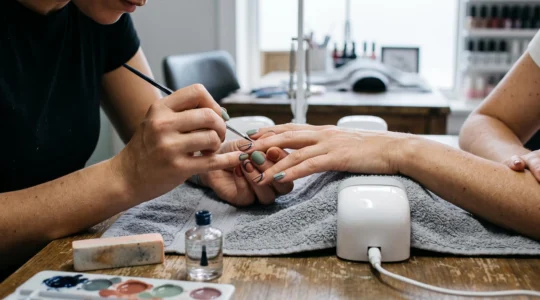
Detailed nail art can look polished at work without catching on clothing, hair or a keyboard. The key is to build visual complexity on a smooth surface rather than relying on raised decorations, thick layers or exposed edges. Fine liner…
Lire la suite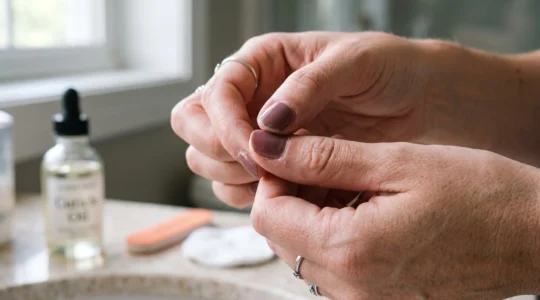
Gel nails that begin lifting after 7–10 days are not necessarily a sign that you need a stronger product. Early lifting can reflect preparation problems, gel touching the surrounding skin, a mismatch between the product and the natural nail, or…
Lire la suite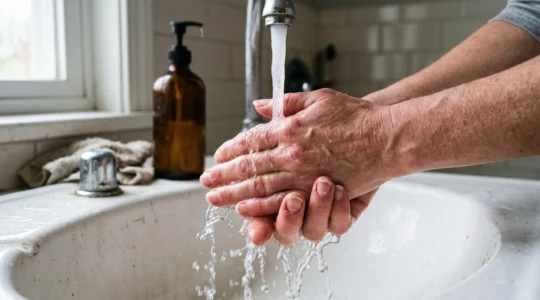
Washing your hands more than 20 times a day can leave your nails peeling at the tips, your cuticles feeling tight and your manicure looking worn long before your next appointment. For healthcare staff, hospitality workers and people who regularly…
Lire la suite