
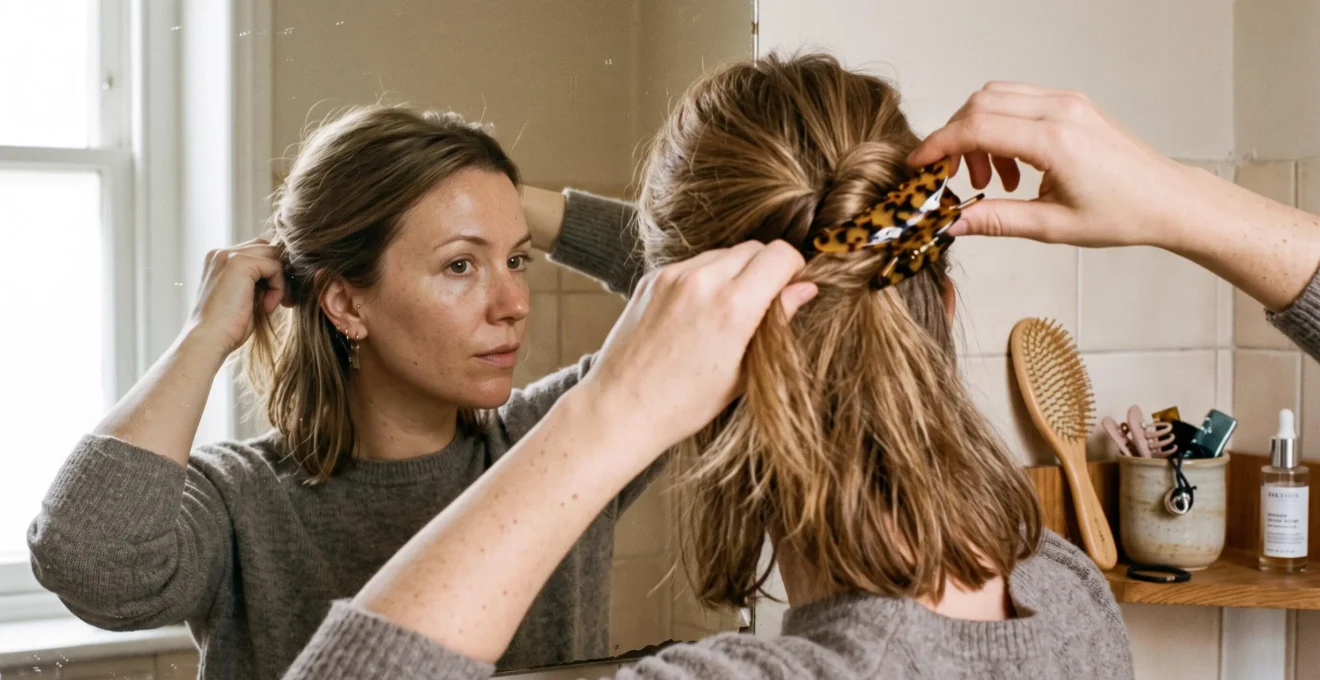
Fine hair can make even a beautiful decorative clip feel unreliable. A claw clip slips after the morning commute, a barrette gradually works its way loose, or a headband slides backwards before lunch. The solution is rarely to squeeze harder. Reliable hold depends on choosing a mechanism that suits the amount of hair being secured, creating enough texture for grip and anchoring the accessory to more than a smooth surface layer.
For most fine-haired wearers seeking an elegant everyday style, a lightweight claw clip with functional teeth is a sensible starting point for half-up hairstyles. A barrette can look more tailored when securing a smaller section, provided its clasp grips the hair rather than merely decorating it. Neither guarantees all-day hold without appropriate placement. A discreet elastic or a few correctly positioned bobby pins can provide the structural support that a decorative accessory lacks.
The aim is a hairstyle that stays in place without scalp tenderness, headaches or snagging during removal. That means evaluating the clip’s construction, the condition of the hair, the hairstyle underneath and the demands of the day. The same principles also help with headbands and overnight hair coverings, although each accessory needs a slightly different approach.
The quick answer: choosing a clip that stays put
- Choose a lightweight claw clip with functional teeth for a half-up style, or a well-made barrette for a smaller, flatter section.
- Add light texture and anchor the accessory through more than the smooth top layer of hair.
- Use hidden pins or an elastic for structural support, and never compensate for slipping by tightening an uncomfortable clip.
- Why Do Decorative Clips Slide Out Even When They Feel Tight at First?
- How Do You Anchor a Decorative Clip So It Doesn’t Budge During a Commute?
- Claw Clip or Barrette: Which Looks More Polished for Shoulder-Length Hair?
- The Clip Placement Mistake That Causes Breakage Around the Crown
- When Should You Add a Decorative Clip So It Doesn’t Loosen After 2 Hours?
- Padded or Thin Headband: Which Looks Better if You Wear Glasses Every Day?
- Silk or Satin: Which Fabric Protects Hair Better Overnight Without Slipping Off?
- How Do You Wear a Headband Without It Sliding Back After 15 Minutes?
Why Do Decorative Clips Slide Out Even When They Feel Tight at First?
Decorative clips often slide out because initial tightness is not the same as secure anchoring. A spring may squeeze the hair firmly, but smooth strands can compress and shift within the clip as the wearer moves. If the teeth do not engage enough hair, or if the hair has little texture, the accessory can gradually lose its grip. Fine hair is particularly susceptible to this problem, especially immediately after washing.
Three factors help identify the cause. First, consider the hair itself. Freshly washed, freshly brushed or product-free hair can feel exceptionally silky, leaving less surface resistance for a clip to work against. Hair with a little natural texture may hold the same accessory more successfully. This is a difference in conditions, not a styling failure.
Second, inspect the mechanism. Teeth that are too short to engage the section, a weak spring or a clasp that does not close securely can make an accessory unsuitable for the hairstyle. Decorative ridges are not necessarily functional gripping teeth. If the clip slips even when inserted through several layers of hair, its construction may be the limiting factor.
Third, check the placement. Clipping only the smooth upper layer gives the accessory little to lock against. A clip can feel tight because the spring is compressed while the hairstyle underneath remains unsecured.
A stylist may recommend adding texture by applying a small amount of hairspray to the accessory. In an expert-advice article, Allure‘s hairstylist tips for using hairspray include applying spray to the backs of bobby pins and hair clips to create additional grip. The technique is practical advice, not a controlled measurement of how long a particular clip will hold.
There is also a comfort trade-off. A stronger spring or more aggressive teeth may appear to solve slipping, but excessive pressure can produce tenderness or headaches. The objective is **mechanical anchoring with comfortable tension**, not the tightest possible squeeze.
Once the cause is clear, the next step is to build a secure base so the decorative piece can remain attractive without having to do all the structural work.
How Do You Anchor a Decorative Clip So It Doesn’t Budge During a Commute?
To anchor a decorative clip for a commute, create a stable section first, give slippery hair a little texture if needed, and insert the clip so its teeth engage both the visible section and hair beneath it. Check the hold with a gentle downward tug before leaving. If the section shifts, reinforce the base with concealed pins or a small clear elastic instead of increasing pressure on the decorative clip.
Start with dry hair and identify the section the accessory needs to secure. If the roots and lengths are exceptionally smooth, use a small amount of dry shampoo or texturising spray where appropriate, following the product instructions. Avoid saturating the hair: the aim is to add manageable texture, not create a stiff coating.
Gather the section and create a small twist, fold or supported half-up shape. Insert the clip through the top section and an underlying section rather than catching only the surface. Angle the teeth so they engage the gathered hair and resist the direction in which the section naturally falls. The ideal angle depends on the clip design and hairstyle, so test the result rather than relying on one universal placement rule.
If the clip still shifts, use a hidden support layer. A small clear elastic can hold the gathered section while the decorative clip covers it. Alternatively, use standard-size bobby pins to secure the section close to the scalp. Allure’s hairstylist advice on using bobby pins recommends standard-size pins for fine hair and discusses applying hairspray to pins to improve their hold. These are professional styling recommendations, not a guarantee of all-day retention.
Before leaving home, perform a simple hold check. Gently tug the hairstyle downwards, then turn or shake your head once. If the clip moves noticeably, reposition it or strengthen the base. There is no scientifically established millimetre threshold that guarantees a secure hairstyle; the practical test is whether the section remains stable without discomfort.
Think about the journey as well as the mirror. Hooded coats, backpack straps, mask straps and headrests can push an accessory sideways or upwards. Positioning a clip slightly higher or farther back may reduce contact, provided the hairstyle remains comfortable and secure. Check that removing a coat or putting on headphones does not catch the teeth.
Your five-step pre-commute hold check
- Identify the section to secure and note whether the hair feels exceptionally smooth or freshly washed.
- Add a light texture product if needed; record which product and approximate amount worked comfortably.
- Gather a twist or half-up section and check that the clip engages hair beneath the surface layer.
- Add a concealed elastic or standard-size bobby pins if the decorative clip cannot hold the structure independently.
- Perform a gentle downward tug and head movement test, then check that the clip causes no pinching, tenderness or interference with outerwear.
With the base secured, the accessory can be chosen for its appearance and silhouette rather than being forced to compensate for a weak hold.
Claw Clip or Barrette: Which Looks More Polished for Shoulder-Length Hair?
For shoulder-length fine hair, a slim barrette often looks more tailored when securing a flat section close to the head, while a small or medium claw clip is a practical choice for a half-up twist that needs room for gathered hair. Neither style is universally more polished. The better choice depends on how much hair is being secured, whether short layers need controlling and how discreetly the mechanism sits against the head.
A claw clip can distribute the holding force across a gathered section without requiring a tight, narrow clasp. For fine hair, a lightweight design with functional teeth and a spring suited to the amount of hair is generally more useful than a large, heavy ornament. However, shoulder-length hair can bunch at the base of a claw clip, making the back look bulky. Shorter layers may also escape if the section is too small or the clip is poorly positioned.
A barrette creates a flatter silhouette. It works particularly well for pulling the sides back or securing a small half-up section, especially when the clasp has teeth that genuinely engage hair. Some decorative barrettes have ridges or ornamental details that contribute little to grip. Check the clasp’s construction and whether it closes securely over the amount of hair you intend to use.
For a more grown-up finish, focus on proportion and material. A slim matte clip, understated tortoiseshell finish or polished metal barrette can complement everyday clothing without looking overly ornate. Oversized plastic designs and conspicuous sparkle can feel more playful, but the distinction is one of styling preference rather than a fixed rule about age.
Try two styles before deciding. For a twist-and-clip half-up look, gather the upper sections, twist gently and secure them with a small claw clip. For a flatter look, pull the sides back without excessive tension and fasten them with a barrette that fits the section. Observe which style keeps the shorter pieces around the face in place without creating a bulky shape or pulling at the temples.
Comfort matters as much as finish. A claw clip that presses against a headrest may be unsuitable for a long journey, even if it holds well. A barrette that catches individual strands can be equally frustrating if it must be removed repeatedly during the day. Match the accessory to the setting as well as the hairstyle.
The best-looking accessory is only a good everyday choice if it does not create repeated tension in the same area of the scalp.
The Clip Placement Mistake That Causes Breakage Around the Crown
One placement habit worth changing is securing a clip in exactly the same crown area every day, particularly when the hairstyle is tight or the accessory presses on the same strands repeatedly. Repeated tension can contribute to hair damage, and sharp or poorly designed teeth can snag strands during removal. Varying comfortable styles and reducing pressure can help limit repeated stress, although no specific rotation schedule has been proven to prevent clip-related breakage.
Breakage does not always happen while the accessory is being worn. A clip may remain apparently secure for hours, then catch hair as it is removed. Pulling the accessory out before opening it fully can drag strands across the teeth or spring mechanism. Open the clip completely, release the hair gently and avoid forcing the accessory through a knot or tightly compressed section.
Inspect the teeth and edges before buying a clip. They should not have sharp burrs, damaged tips or rough surfaces that catch individual strands. A strong spring is not automatically a sign of good quality: the mechanism must suit the size of the section and hold it without uncomfortable pressure. If the accessory causes tenderness, stinging or a headache, loosen the style or remove it.
The American Academy of Dermatology guidance on hairstyles that pull explains that repeated pulling can contribute to hair breakage and traction alopecia. The organisation identifies discomfort and broken hairs among the warning signs that a hairstyle needs attention. This is general dermatological guidance on traction, not evidence that ordinary decorative clips inevitably cause hair loss.
Check the whole styling routine for overlapping pressure. Repeatedly placing a clip where a tight ponytail has already stressed the hair, or where headphones and glasses arms rub, can make one area less comfortable. Alternate between suitable positions and hairstyles when possible, without moving the clip into another area where it causes pressure.
If tenderness or breakage persists after changing the accessory and reducing tension, seek advice from a qualified healthcare professional or dermatologist rather than assuming that placement alone explains the problem.
When Should You Add a Decorative Clip So It Doesn’t Loosen After 2 Hours?
Add a decorative clip once the hairstyle’s underlying structure is secure, rather than expecting the ornament to create and maintain the entire style by itself. If hair is freshly brushed and exceptionally smooth, a small amount of appropriate texture preparation may improve grip. Letting a twist or folded section settle briefly before adding the clip can also reveal whether the base needs reinforcement. No particular timing guarantees that an accessory will hold for two hours.
Fine hair can change position as it settles under a clip. A section that initially fills the space between the teeth may compress as the spring continues to hold it. If the style contains no twist, fold, gathered base or supporting pins, the accessory has little structure to resist this movement. The result is often gradual loosening rather than an immediate failure.
A more reliable sequence is to prepare the hair, build the shape and then add the decorative piece. Secure the structure with an elastic or discreet pins if necessary. Allow a few minutes for the style to settle, check for loose layers and position the clip so it engages the supported section. If the ornament moves during a gentle test, reinforce the base instead of tightening the clip until it becomes uncomfortable.
Hair condition also matters. Recently washed hair may benefit from light texture preparation, while hair that already has natural texture may not need additional product. Dry shampoo and texturising spray are not interchangeable for every person or hair type; use a product appropriate to the hair and follow its directions. Too much product can leave residue or alter the appearance of the finish.
Humidity, damp hair and frequent movement can make a style less predictable. For a long or active day, a hidden elastic or additional pins may provide more dependable support than a stronger decorative spring. The same principle applies when travelling: plan for coat changes, headrests and bag straps rather than assuming that the initial mirror check will predict every movement.
Once the timing and anchoring are right, the next consideration is how other accessories interact with the hairstyle, particularly when glasses need to remain comfortable throughout the day.
Padded or Thin Headband: Which Looks Better if You Wear Glasses Every Day?
A thin, flexible headband is often the more comfortable starting point for someone who wears glasses all day, especially with bold frames or behind-the-ear pressure points. A padded headband can provide a more structured look and balance delicate wire or rimless frames, but its height and position may interfere with glasses arms. Neither design is universally better: the best option fits the head, complements the frames and stays comfortable during prolonged wear.
Consider how the band and glasses occupy space around the temples. A thick padded headband may sit higher on the crown, while a thin band often follows the hairline more closely. Depending on the design and head shape, either can press against the glasses arms. Try moving the band slightly backwards or forwards while keeping the glasses in their normal position. The goal is to avoid forcing either accessory into an uncomfortable position.
Visual balance can guide the choice. Thick, bold frames already create a strong focal point, so a narrow band can keep the overall look restrained. Fine wire frames or rimless glasses create less visual weight, allowing a padded band to add structure. Material and colour matter, too: a neutral matte band tends to be versatile, while a fabric-covered or embellished design can become the main feature of an outfit.
Comfort should determine how long the accessory stays on. Padded bands can add pressure around the crown, and glasses already create contact points around the nose and ears. If the combination becomes uncomfortable, change the position or choose a more flexible design. Do not keep wearing a band that creates persistent pressure simply because it looks polished.
Fine hair introduces another trade-off. A narrow band can sit close to the head but may slip along smooth strands because it has little resistance. Light texture at the roots can help, provided the product is suitable for the hair. A band with internal grip or teeth may be more practical than one that relies entirely on pressure.
When the headband fits comfortably with glasses, its remaining challenge is mechanical: staying in position as the head moves without relying on excessive pressure.
Silk or Satin: Which Fabric Protects Hair Better Overnight Without Slipping Off?
Silk and satin are not directly competing material categories: silk is a fibre, while satin describes a weave. A satin fabric may be made from polyester or silk, so the label alone does not establish which product will protect hair better overnight. Choose a covering according to its fit, breathability, care requirements and ability to stay in place while you sleep, rather than assuming that one name guarantees better results.
Both silk and polyester satin can provide smooth surfaces that reduce friction between hair and fabric. A bonnet or scarf may help reduce friction-related frizz and breakage, but the benefit depends on how it fits and how the hair is contained. A covering that slips off halfway through the night may provide less consistent protection than one that stays comfortably in position.
Fit is especially important. A bonnet should accommodate the length and volume of the hair without being so tight that the edge presses persistently against the scalp. Adjustable ties, elasticated edges and different bonnet shapes offer different ways of securing the covering. The best design depends on the wearer’s hairstyle, sleeping habits and tolerance for pressure.
Good Housekeeping‘s expert-reviewed sleep bonnet comparison explains the difference between silk fibres and satin weaves and discusses comfort, closure design and care. It also notes that polyester satin can be a less expensive alternative to silk. These consumer recommendations do not establish that silk always protects hair better or that one bonnet design will stay on every sleeper.
For practical selection, check the following features:
- Fit: the bonnet stays in place without painful tightness or excessive pressure at the hairline.
- Coverage: the design accommodates the hairstyle and hair length worn to bed.
- Comfort: the fabric feels suitable for the room temperature and the wearer’s sleeping habits.
- Care: the item can be washed according to its instructions without excessive effort.
- Closure: ties, elastic or a shaped design provide a secure fit without pulling on the hair.
Overnight protection also changes the feel of hair the following morning. Hair that has experienced less friction may feel smoother, which can make a decorative clip harder to anchor. That does not mean the overnight routine has failed. It simply means that the morning styling routine may need a little texture or a better-supported section.
A comfortable covering can reduce friction overnight, but it does not replace the grip and fit adjustments needed to keep a daytime headband from sliding backwards.
Key takeaways
- Choose a headband for its actual fit and internal grip, not simply its width or appearance.
- Position it to work with your head shape, hair texture and glasses rather than forcing it to stay in place through pressure.
- Use light texture or discreet pins when necessary, and change the design if slipping or discomfort continues.
How Do You Wear a Headband Without It Sliding Back After 15 Minutes?
A headband usually needs either more grip at its contact points or a better fit to prevent it from sliding backwards. Smooth hair provides little resistance, while the slope of the head behind the ears can encourage a band to move as the wearer walks or turns. For fine hair, a design with internal teeth or silicone grip, combined with light texture at the roots, is a practical starting point. The best method depends on the band’s construction and fit.
First, check the size and shape. A rigid band that is too wide for the head may ride upwards, while one that presses too tightly can become uncomfortable. Flexible or adjustable designs may be easier to position securely. Place the band slightly forward of where it naturally settles, then move it gently into position without forcing it against the scalp.
For a band that fits well but still slips, discreet bobby pins can provide extra support. Place a pin at each temple to secure the band to the underlying hair. Crossing pins in an X is one possible technique, but its effectiveness depends on the hairstyle, pin placement and band design; it is not a universal requirement. Standard-size bobby pins are a reasonable starting point for fine hair.
A second option is a light application of texturising mist at the hair’s contact line. This can add resistance without visible hardware, although it may not be enough for a long day of movement. If the band has internal teeth or silicone grip, check that these features sit against the hair as intended. A worn or poorly fitting band may need replacing rather than repeated attempts at repositioning.
Fine hair often benefits from combining methods: prepare the roots lightly, choose a headband with a suitable gripping surface and use concealed pins if needed. Avoid building up excessive product or tightening the band to compensate for a poor fit. If the accessory causes pain or persistent pressure, remove it and choose another design.
For the most reliable result, test the headband with the glasses, hairstyle and clothing you expect to wear that day. A short check involving ordinary head movements can reveal whether the design needs repositioning or additional support. The right accessory should stay comfortable as well as secure, so persistent slipping or pressure is a reason to change the fit rather than keep tightening it.
What type of decorative clip is best for fine hair?
A lightweight claw clip with functional teeth is a practical choice for half-up styles, while a well-made barrette can work better for smaller, flatter sections. Look for a secure mechanism that suits the amount of hair being held. Hair texture, section size and placement matter as much as the accessory itself.
How can you stop a barrette from slipping without using lots of hairspray?
Give the section a stable base by gathering or twisting the hair and, if necessary, securing it with a discreet elastic or bobby pins. Ensure the barrette engages more than the smooth surface layer. A small amount of texture product may help, but a better-fitting clasp and sound anchoring are preferable to repeatedly adding product.
Can wearing a claw clip every day damage fine hair?
Risk depends on tension, placement, the clip’s construction and how it is removed. Repeated pulling can contribute to breakage and traction-related hair loss, according to dermatological guidance. Vary comfortable hairstyles, open the clip fully before removal and stop using any accessory that causes pain, tenderness or repeated snagging.
Should you put a decorative clip into freshly washed hair?
You can, but freshly washed and brushed hair may be particularly smooth and difficult to grip. If the clip slides, try a small amount of suitable texture product or secure the hairstyle’s structure with an elastic or pins first. There is no universal waiting period that guarantees a better hold.
How do you know when a hair clip is too tight?
Scalp tenderness, headaches, pinching, stinging or discomfort around the clip are signs to loosen or remove it. Repeated breakage or localised hair loss also warrants attention. A clip should hold the hairstyle without persistent pulling. If symptoms or hair loss continue after reducing tension, seek advice from a qualified healthcare professional or dermatologist.