
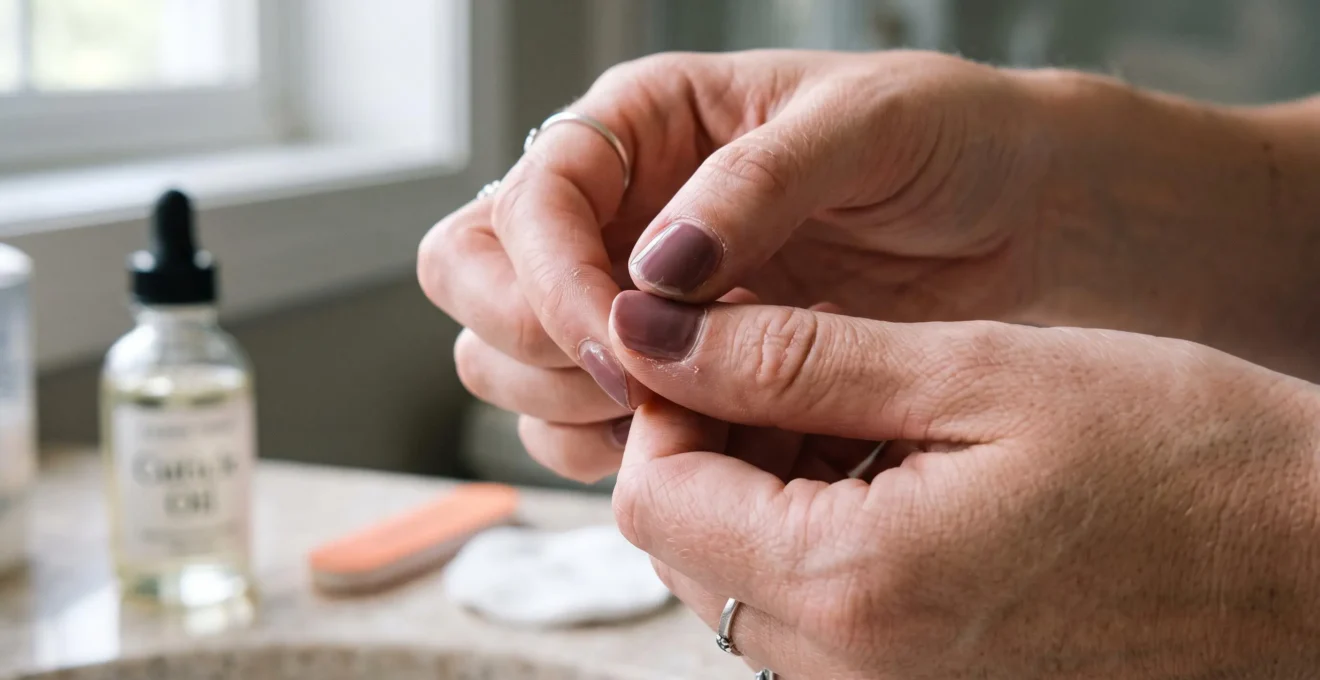
Gel nails that begin lifting after 7–10 days are not necessarily a sign that you need a stronger product. Early lifting can reflect preparation problems, gel touching the surrounding skin, a mismatch between the product and the natural nail, or repeated mechanical and environmental stress. The most effective response is to identify the likely cause before changing your entire manicure routine.
For UK gel-wearers, the goal is to maintain a glossy finish without repeatedly sacrificing natural nail thickness. That means using the least aggressive preparation compatible with the chosen gel system, following its application and curing instructions, removing the product without forcing it off, and recognising when repeated splitting calls for a break.
Daily habits also matter. Typing, cleaning, frequent handwashing and prolonged exposure to water can add stress to already fragile nails. However, early lifting does not prove that any single habit is responsible, and the same visible problem can have different causes.
The practical priority is to protect the natural nail first. Once gel has lifted, avoid picking at the gap or sealing over a separation. Correct the underlying problem before the next application, and do not continue gel wear if the nail plate is becoming increasingly thin, flexible or damaged.
Quick guide to preventing gel nail lifting
- Keep preparation gentle, avoid unnecessary buffing and prevent gel from contacting the surrounding skin.
- Never peel or pry off cured gel; use a removal method appropriate to the exact product.
- Keep nails short when they split, protect them during prolonged wet work and take a break when damage keeps recurring.
- Why Do Gel Nails Lift at the Cuticle Even When They Look Perfect on Day One?
- How Do You Prep Nails for Gel Without Thinning Them Over Time?
- Builder Gel or Soft Gel: Which One Works Better If You Type All Day?
- The Removal Mistake That Causes White Spots and Peeling for Weeks
- When Should You Take a Break From Gel If Your Nails Keep Splitting?
- Why Do Nails Peel More When You’re Washing Hands All Day?
- How Water, Detergents and Cleaning Products Undermine Your Gel Wear Between Manicures?
- How Do You Stop Nails Peeling If You Wash Your Hands 20+ Times a Day?
Why Do Gel Nails Lift at the Cuticle Even When They Look Perfect on Day One?
Gel nails can lift at the cuticle when the bond between the product and the natural nail is compromised or when repeated movement and exposure place too much stress on the coating. Contamination, unsuitable preparation, gel touching the surrounding skin and product-specific application errors are possible contributors. A flawless appearance immediately after curing does not establish that adhesion will remain intact.
The cuticle area deserves particular attention because even a small separation can allow hair and debris to catch underneath the coating. However, lifting in this location does not automatically mean that the nail was insufficiently dehydrated. Over-filing, an unsuitable product or an application error can produce a similar result, so repeating the same preparation more aggressively may make matters worse.
Check your manicure under good light rather than testing the bond by pressing, bending or prying at the gel. Look for a visible hairline gap near the cuticle or sidewalls, a raised edge, a crack or a change in the coating’s appearance. These observations can help identify a developing problem, but they cannot reliably distinguish contamination from a curing or product-compatibility issue on their own.
If a gap appears, do not glue it down, apply another layer over it or pick at the lifted section. Arrange safe removal or professional assessment, particularly if the separation is spreading or the natural nail underneath looks damaged.
The key distinction is between a problem with adhesion and a problem with the nail plate itself. The first may require a change in technique or product; the second calls for less mechanical stress and potentially a break from gel.
Once the likely cause has been identified, the next priority is preserving the nail plate during preparation. More aggressive filing is not a reliable solution to recurring lifting.
How Do You Prep Nails for Gel Without Thinning Them Over Time?
The safest preparation routine removes only what the chosen gel system requires, rather than repeatedly roughening the natural nail. Keep buffing to a minimum, avoid unnecessary cuticle manipulation and prevent primer or gel from contacting the surrounding skin. Each new manicure should be approached as part of a long-term maintenance cycle, not as an opportunity to remove more nail surface.
Preparation should begin with clean, dry nails and careful shaping. Follow the manufacturer’s instructions for the specific system: some products require a particular surface treatment, while others may be designed for minimal or no buffing. Do not assume that every gel needs identical preparation, dehydration or primer.
A practical sequence is to shape the free edge, tidy the surrounding area without damaging living tissue, and then perform only the preparation specified for the product. If a dehydrator or primer is required, apply it according to the system’s directions. Repeating filing passes because the surface does not feel sufficiently rough can remove unnecessary nail material without improving the outcome.
Aggressive e-file work near the cuticle is especially worth avoiding. The objective is to prepare the nail surface without cutting into the plate or injuring the surrounding skin. A clinical discussion of nail enhancement recommends keeping buffing to a minimum and avoiding unnecessary damage during preparation. See this clinical review of aesthetic gel nail procedures for further guidance.
Repeated lifting accompanied by increasing flexibility, peeling or a translucent appearance at the tip is a reason to reassess the routine. These observations are warning signs, not a validated measurement of nail thickness. Continuing to file more aggressively is unlikely to be a sensible response to a plate that already appears damaged.
Your five-step nail preparation audit
- Check the natural nail before starting; record any splitting, peeling, tenderness or visible thinning.
- Shape the free edge first and note the final length you intend to maintain.
- Confirm the exact gel system’s preparation instructions and write down whether buffing, dehydrator or primer is required.
- Inspect the surrounding skin and nail plate after preparation; record any accidental cuts, irritation or excessive filing.
- After application, check that the product has not flooded the cuticle or sidewalls and that the manufacturer’s curing instructions have been followed.
Preparation protects the nail plate, but it cannot compensate for a product that does not suit the wearer’s natural nail or daily activities. That makes the choice between gel systems the next consideration.
Builder Gel or Soft Gel: Which One Works Better If You Type All Day?
Neither builder gel nor soft gel can be declared universally better for someone who types all day. The appropriate choice depends on the exact formulation, the condition and flexibility of the natural nail, the intended length and the manufacturer’s application requirements. The available sources do not establish that one system consistently lasts longer than the other under keyboard stress.
Builder gel is commonly used to add structure, while soft-gel products vary in their flexibility and intended use. Those broad descriptions are not enough to predict retention for an individual. Product formulations differ, and labels alone do not establish how a particular coating will behave on a particular nail.
Typing can create repeated contact and leverage, especially when nails extend beyond the fingertips. Long extensions may catch on keys or other surfaces, while repeated impacts can contribute to mechanical stress. A shorter shape is often a sensible starting point for someone who types frequently and already experiences lifting or splitting.
| Consideration | Builder gel | Soft gel |
|—|—|—|
| Natural nail condition | Ask a trained nail technician whether added structure is suitable for the specific nail and product. | Confirm that the product is designed for the intended application and nail condition. |
| Frequent typing | Consider whether the planned length and structure create unwanted leverage. | Consider whether the product’s intended flexibility and application are suitable. |
| At-home application | Follow the exact system’s preparation, application and curing instructions. | Check the same requirements; do not assume all soft gels are interchangeable. |
| Repeated lifting | Reassess preparation, product compatibility and application before changing systems. | Apply the same assessment rather than assuming a softer product will solve the problem. |
A rigid coating on a flexible natural nail may behave differently from a more flexible system, but the source material provided does not establish a universal hard-soft interface mechanism or prove that builder gel causes earlier lifting during typing. Such explanations should be treated as possibilities to assess, not established diagnoses.
Ask a qualified nail technician to assess your nail plate, current length, previous lifting pattern and the particular product’s requirements. If splitting or thinning is already present, the more important decision may be whether to pause gel altogether.
The right system still needs to be removed carefully. Even a well-matched gel can leave nails damaged if the coating is peeled, prised or filed away unnecessarily.
The Removal Mistake That Causes White Spots and Peeling for Weeks
The most important removal mistake is forcing cured gel away from the natural nail. Peeling, picking, scraping or filing off product without understanding its removal requirements can damage the nail plate, leaving roughness, white marks and layers that peel as the nail grows. The safest method depends on whether the product is designed to soak off or requires professional filing.
For removable gel polish, the American Academy of Dermatology Association describes controlled acetone exposure followed by gentle removal. Its instructions include protecting the surrounding skin with petroleum jelly, using acetone-soaked cotton secured with plastic wrap and allowing the product time to soften. The guidance describes a 10-minute soak for the particular gel polish procedure; that duration is not universal for every formulation.
Read the instructions for your specific product before attempting removal. A hard gel that must be filed off cannot automatically be treated like soak-off gel. Prolonged soaking may expose the surrounding skin and natural nail to unnecessary chemical contact without safely removing the product.
The American Academy of Dermatology’s gel polish removal instructions warn that picking or scraping off gel can significantly damage natural nails. If the coating does not release with the prescribed method, stop rather than increasing the force. Professional removal is preferable when the product type is uncertain or the nail is already fragile.
After removal, moisturise the surrounding skin and nail folds. Avoid immediately applying another coating if the nail looks swollen, irritated, peeling or unusually flexible. The right recovery period depends on the condition of the plate; there is no single waiting time that guarantees safe reapplication.
White spots do not all have the same cause, so persistent changes should not automatically be attributed to one removal error. Fingernails also grow slowly, meaning visible damage can remain while the affected section grows out.
If the same nails continue to peel or split after careful removal, repeated reapplication may be perpetuating the problem. A break becomes more useful when it prevents further mechanical damage rather than simply delaying the next manicure.
When Should You Take a Break From Gel If Your Nails Keep Splitting?
Take a break from gel when splitting repeatedly returns, the nail plate appears increasingly thin or flexible, or lifting begins progressively earlier despite changes to preparation and removal. A break is particularly sensible when the natural nail is peeling or damaged, because another application introduces additional product, preparation and eventual removal. Persistent or unexplained changes warrant assessment by a healthcare professional.
One isolated chip does not necessarily mean that the nail has suffered cumulative damage. Look for a pattern across several cycles: the same nail splitting in the same place, peeling after removal, increasing sensitivity, or a coating that repeatedly separates despite careful application. These clues justify reassessing the routine rather than repeatedly switching brands.
A break does not make nails regenerate faster simply because they are exposed to air. Nails do not breathe. The benefit comes from stopping the cycle of filing, product application and removal, allowing damaged sections to grow out without further cosmetic stress.
During the break, keep nails short and smoothly shaped to reduce catching and leverage. Moisturise the nail folds and surrounding skin regularly, and use gloves for prolonged wet household tasks when appropriate. Oils and moisturisers can help with dryness, but they cannot guarantee repair of structural damage already present in the plate.
There is no evidence-based calendar interval in the supplied sources that guarantees a nail is ready for gel again. Instead, reassess whether splitting has grown out, the surface looks healthier and the nail is no longer showing the same recurring damage. Even then, restarting is optional rather than necessary.
If the nail remains painful, discoloured, inflamed or persistently separated, seek medical advice instead of covering it with another product. A nail technician can assess application issues, but cannot diagnose an underlying medical condition.
For some people, a careful break and gentler maintenance are enough to interrupt repeated damage. For others, frequent water exposure remains an ongoing challenge that requires changes to everyday hand care.
Why Do Nails Peel More When You’re Washing Hands All Day?
Frequent wetting and drying can contribute to nail fragility because the nail plate changes its hydration as it encounters water and then dries. Repeated cycles may weaken cohesion between layers of the plate, making peeling and splitting more likely. The effect varies between individuals, and this mechanism does not establish that frequent washing alone is responsible for every case of gel lifting.
A review of brittle nails discusses repeated hydration and drying, mechanical trauma and chemical exposure as factors associated with nail fragility. It also notes that occupational groups such as nurses, hairdressers and household workers may experience repeated exposure. Read the scientific review of brittle nail causes and management for a broader explanation of these contributing factors.
For gel-wearers, the practical issue is that the natural nail and its coating experience different environmental conditions during daily activities. However, the available evidence does not quantify how many individual handwashing episodes cause lifting, or establish that gel must fail before day seven in people who wash frequently.
Hot water and vigorous drying can also aggravate dry skin around the nail folds. This matters for comfort and skin health, even though dry skin alone does not prove that the gel-to-nail bond has failed. Avoid trying to compensate for frequent washing by filing the nail more aggressively or repeatedly applying extra product around the cuticle.
When washing cannot be reduced, concentrate on controllable factors. Use comfortable water temperatures, dry hands gently and thoroughly, and apply a suitable moisturiser to the surrounding skin. Cuticle oil can be incorporated into the routine once the nails are dry, but it should not be treated as a guaranteed way to restore adhesion or reverse structural damage.
Observe whether peeling is concentrated in particular nails, appears after repeated wet work or continues during periods of lower exposure. That pattern can help guide a conversation with a nail professional, although it cannot establish a diagnosis by itself.
Handwashing is only one part of the picture. Cleaning products, prolonged soaking and solvents can add different forms of exposure, so protecting the manicure also means considering the tasks performed between appointments.
Key points before deciding how to manage frequent handwashing
- Protect natural nail thickness first; repeated splitting is a reason to reconsider gel rather than increase filing.
- Prioritise gentle drying and skin moisturising without compromising necessary hand hygiene.
- Assess whether prolonged water and cleaning-product exposure makes shorter nails or a temporary break more practical than maintaining a fixed wear target.
How Water, Detergents and Cleaning Products Undermine Your Gel Wear Between Manicures?
Prolonged soaking, repeated wet-dry cycles and direct contact with harsh cleaning products can contribute to nail fragility and may complicate gel maintenance. Brief splashes are not equivalent to extended exposure, and the effect depends on the task, product and condition of the natural nail. The available sources do not establish a universal ranking of cleaning products by their effect on gel adhesion.
Repeated exposure to water and drying can weaken the nail plate, while solvents and chemical solutions are recognised contributors to nail fragility. These effects should be distinguished from a confirmed failure of the gel bond: a peeling natural nail, a lifted coating and a damaged surrounding skin barrier are related concerns, but they are not interchangeable diagnoses.
For routine household cleaning, wear suitable protective gloves when tasks involve prolonged contact with water or detergents. Choose gentler products where practical and follow their safety instructions. Avoid prolonged soaking when it is unnecessary, and dry hands thoroughly after washing.
A dull surface or chipped top coat is not, by itself, proof that the gel has lifted from the natural nail. Do not apply a new layer over a separation or use extra product to conceal damage. If the coating is visibly lifting, arrange appropriate repair or removal rather than allowing water and debris to collect underneath it.
It is also important not to assume that switching gel brands will solve a problem that follows the same pattern after cleaning-heavy days. Record the exposure, the affected nails and the timing of the first visible changes. This provides more useful information than changing several variables at once.
For people whose work requires handwashing throughout the day, exposure cannot always be eliminated. The most realistic routine may therefore involve shorter nails, careful maintenance and accepting that gel is not suitable for every working environment.
How Do You Stop Nails Peeling If You Wash Your Hands 20+ Times a Day?
If you wash your hands 20 or more times a day, focus on protecting the natural nail rather than trying to guarantee a particular gel wear time. Keep nails short, minimise repeated filing and removal, moisturise after hands are dry, and protect them during prolonged wet work where appropriate. If peeling continues, temporarily switching to bare, short nails may be more practical than repeatedly repairing a manicure.
The figure of 20 washes is a description of a routine, not a validated threshold for nail damage. The outcome depends on several factors, including water exposure, drying, detergents, mechanical stress and the condition of the nail plate. The available research does not establish a specific number of washes at which gel lifting becomes inevitable.
Start by distinguishing essential hand hygiene from avoidable exposure. Do not reduce necessary washing to preserve a manicure. In healthcare settings, follow the relevant infection-prevention rules, which may impose restrictions on artificial nails for staff caring for high-risk patients.
The CDC hand hygiene and fingernail safety recommendations advise healthcare workers to avoid hot water, dry hands gently and use appropriate moisturisers to help reduce skin dryness. The guidance also highlights restrictions on artificial nails in specific clinical circumstances. These recommendations concern infection prevention and skin health, not a guaranteed method for extending gel wear.
For everyday care, keep nails short enough to reduce catching and leverage, moisturise the skin around the nails when dry, and consider gloves for cleaning or other prolonged wet tasks when appropriate. Do not assume that a protective top coat will solve a lifted bond, and do not cover a damaged nail merely to maintain a glossy finish.
If peeling persists despite gentler maintenance, consider taking a break from gel until the affected nail has grown out sufficiently and looks healthier. A temporary return to bare nails may be the more protective option for someone whose daily routine repeatedly exposes the nail plate to moisture and mechanical stress.
The most sustainable routine is the one that fits your work and protects your natural nails. If the same peeling continues, stop treating longer wear as the priority and seek professional advice about the condition of the nail plate.
Is it normal for gel nails to lift after 7–10 days?
Early lifting can occur, but 7–10 days is not an established universal lifespan for gel nails. The result depends on the product, application, nail condition and daily exposure. If lifting repeatedly starts at the same place or appears progressively earlier, review the preparation and removal routine instead of simply accepting the pattern as normal.
Can cuticle oil stop gel nails from lifting?
Cuticle oil can help moisturise the nail folds and surrounding skin, but it cannot guarantee adhesion or repair an existing separation. Apply it when the nail is dry and avoid getting oil onto the nail immediately before gel application unless the product instructions specifically allow it. Preparation and application should follow the requirements of the chosen system.
Should I remove gel as soon as I notice lifting?
Do not pick, peel or pry at the lifted section, and do not seal it under another layer. Arrange appropriate repair or removal, using a method designed for the specific gel product. Seek professional advice if the separation is extensive or the natural nail is damaged, painful or discoloured.
How long should I wait before applying gel again after nail damage?
There is no single waiting period that guarantees a damaged nail is ready for another application. Consider the condition of the plate, whether splitting has grown out and whether the surface looks healthier. If the nail remains thin, painful, inflamed or persistently peeling, avoid covering it and seek advice from a healthcare professional.
Are shorter nails better for people who type and wash their hands frequently?
Shorter nails can reduce catching and leverage, making them a sensible option when typing, cleaning or frequent handwashing contributes to repeated mechanical stress. They do not eliminate every cause of lifting or peeling, but they can make daily maintenance more manageable. In healthcare settings, follow workplace nail and infection-prevention requirements.