
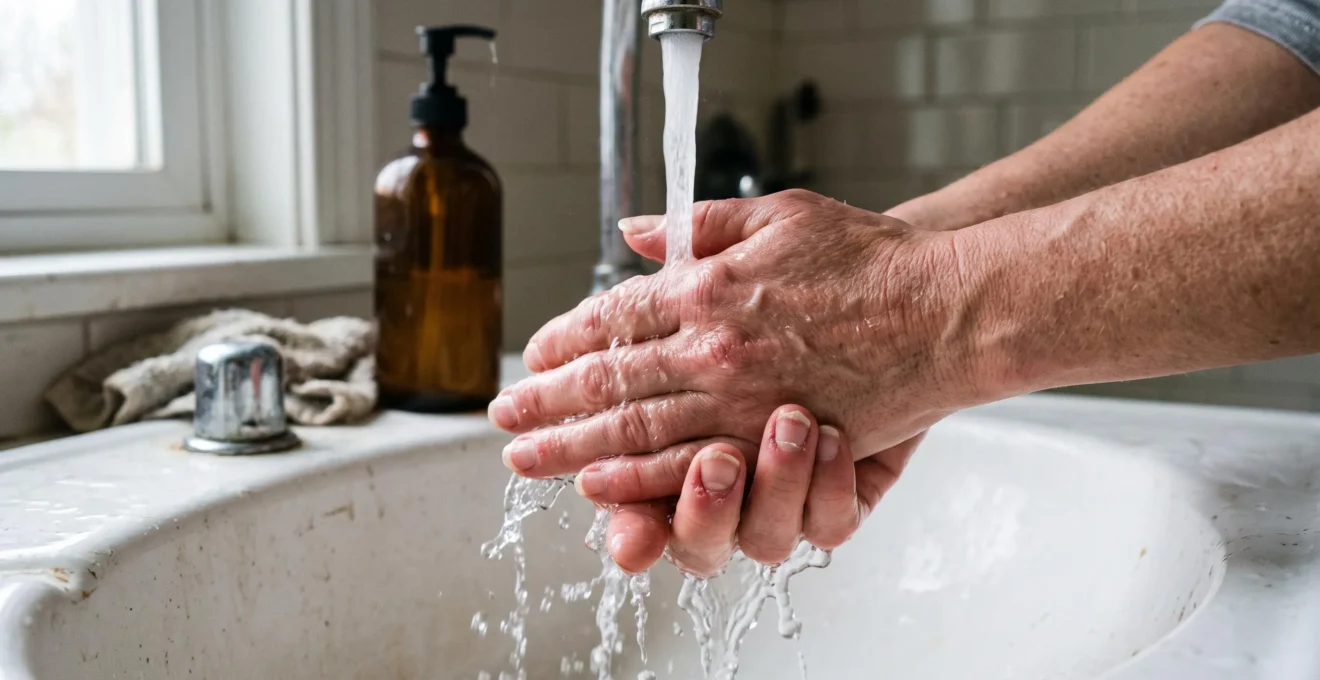
Washing your hands more than 20 times a day can leave your nails peeling at the tips, your cuticles feeling tight and your manicure looking worn long before your next appointment. For healthcare staff, hospitality workers and people who regularly move between keyboards, shared surfaces and handwashing facilities, simply avoiding water is not realistic.
The practical solution is to reduce avoidable damage between necessary washes. That means choosing less drying washing conditions where workplace hygiene rules permit, moisturising the fingertips, keeping nail edges smooth and avoiding manicure treatments that make already fragile nails thinner or excessively rigid.
A cuticle oil may improve dryness, but it cannot glue separated nail layers back together. Similarly, a strengthening polish cannot compensate for repeated picking, aggressive buffing or poor gel removal. The most effective routine combines several manageable habits rather than relying on one product.
These steps can fit around clinical shifts, food-service hygiene requirements and desk-based work without compromising required hand hygiene.
Peeling nails: the essentials for frequent handwashers
- Use lukewarm water and suitable cleansing products where permitted, then moisturise your hands, nails and cuticles.
- Keep nails short, gently rounded and free from snags; avoid unnecessary buffing and overly rigid strengthening products.
- Never pick off lifting gel. Review repeated lifting or splitting before booking another manicure, and allow damaged nails time to grow.
- Why Do Nails Peel More When You’re Washing Hands All Day?
- How Do You Care for Cuticles at Work Without Making Everything Greasy?
- Nail Strengthener or Base Coat: Which Helps More With Peeling Nails?
- The Buffing Mistake That Makes Nails Bend and Tear More Easily
- When Should You File Your Nails to Prevent Snags if You Type All Day?
- Why Do Gel Nails Lift at the Cuticle Even When They Look Perfect on Day One?
- How Do You Stop Gel Nails Lifting After 7–10 Days?
- When Should You Take a Break From Gel If Your Nails Keep Splitting?
Why Do Nails Peel More When You’re Washing Hands All Day?
Nails tend to peel more with frequent handwashing because repeated water exposure can contribute to splitting of the layered nail plate. Washing also removes moisture-protecting oils from the surrounding skin. When this happens throughout a working day, existing weaknesses at the nail tips become more vulnerable to everyday friction and catching.
Fingernails consist of layers of keratin. During repeated wetting and drying, the nail plate takes up and loses moisture, undergoing physical changes that can contribute to brittleness and separation. It is the cumulative exposure that matters, not necessarily one unusually long wash.
The connection between water exposure and splitting is recognised in Mayo Clinic‘s fingernail care recommendations. However, there is no established threshold in this guidance showing that exactly 20 washes per day will cause peeling. Exposure, nail condition and additional mechanical wear all matter.
It also helps to distinguish two problems. Dry cuticles and fingertip skin may improve with regular emollient care. Nail layers that have already lifted apart are structurally damaged; moisturiser can support the surrounding area and reduce further dryness, but it cannot permanently reattach those layers.
Hot water and drying soaps can make the surrounding skin less comfortable. When occupational rules allow a choice, lukewarm water and a gentler cleansing product are sensible adjustments. In healthcare and food handling, always follow the applicable hand-hygiene protocol rather than substituting a cosmetic preference.
Hand care therefore works best as damage control: protect the skin, reduce unnecessary physical stress and allow stronger new nail growth to replace vulnerable material.
Once washing conditions are as gentle as your job permits, the next practical priority is keeping cuticles comfortable without leaving residue on everything you touch.
How Do You Care for Cuticles at Work Without Making Everything Greasy?
To care for cuticles without greasy hands, choose a small amount of fragrance-free, low-residue moisturiser or a precision oil applicator, apply it around the nail folds and remove any excess from the fingertips. Use richer creams or ointments during breaks or after work, when immediate handling of equipment is less important.
The best product is one that matches the moment. Lightweight lotions or oils may feel more convenient at an office desk, while thicker balms and petrolatum-based ointments can be useful when there is time for a more protective application.
The American Academy of Dermatology handwashing and dry-skin advice recommends moisturising after washing, including the fingertips and nails, and favours fragrance-free, dye-free products for easily irritated skin. It does not establish that cuticle oil pens work better than creams, so choose according to tolerance, residue and practicality.
For a quick desk-based application, dispense a small amount along the cuticle line and lateral nail folds. Gently press or massage it in, then wipe away anything left on the finger pads before returning to typing or handling documents.
For nurses, clinicians and food-service workers, the approach needs one important adjustment: workplace hand hygiene and glove safety take priority. Do not apply cosmetic oils immediately before a task requiring clean hands or sterile equipment. Some lotions can also be incompatible with particular glove materials or workplace products.
Gloves may temporarily trap moisture or product against the skin, but that does not prove faster absorption, and prolonged occlusion may aggravate irritation. Use only employer-approved hand-care products when working with protective gloves, and follow local guidance on application timing.
To make care manageable, attach it to two existing moments, such as after lunch and after the shift. These are convenient reminders rather than a clinically tested replacement for moisturising after washes. Apply additional moisturiser whenever needed and allowed.
Cuticle moisturising addresses dryness around the nail, while the next decision concerns whether a coating on the nail plate itself could reduce everyday wear.
Nail Strengthener or Base Coat: Which Helps More With Peeling Nails?
A nail strengthener and a base coat serve different purposes, and neither is a proven repair for already-separated nail layers. Strengtheners are intended to reinforce or harden the nail, while base coats usually prepare the surface for polish and may limit staining. For peeling nails, flexibility and gentle maintenance can matter more than maximum hardness.
The important distinction is between protecting a vulnerable nail and making it rigid. Some strengthening formulations increase stiffness, which can leave a nail more likely to break under pressure instead of flexing.
In its manicure and pedicure safety recommendations, the American Academy of Dermatology cautions that strengthening ingredients can increase nail stiffness and breakage. Its recommendation for base coats concerns reducing staining from certain coloured polishes, not a demonstrated treatment for peeling.
Choose according to your current nail condition and manicure habits rather than assuming every product labelled strengthening will help.
| Nail situation | Practical priority | What to avoid assuming |
|---|---|---|
| Bare nails with active peeling | Moisturising, short smooth edges and reduced mechanical damage | That a hardener can bond separated layers back together |
| Coloured polish worn most of the week | A compatible base coat for the intended polish and gentle removal | That a base coat prevents all peeling or water-related damage |
| Preparing for a gel appointment | Assessing the condition of the natural nail and avoiding excessive filing | That adding a strengthener beneath gel improves adhesion |
Frequent handwashing makes coating maintenance relevant, but there is no reliable wash-count rule for how long a strengthener or base coat will last. Watch for chipped edges or lifting, follow the manufacturer’s instructions and avoid layering products over damaged or detached material.
Where compatible with the product, careful application around the free edge may help keep a coating neat. It should not be treated as a waterproof seal or a substitute for protecting nails during wet work.
If you already have thin, bendy nails, repeatedly trying harder formulas may be counterproductive. A simple manicure with minimal removal damage is often a more appropriate starting point.
Before adding another product, also consider whether routine preparation is removing the very nail material you are trying to preserve.
The Buffing Mistake That Makes Nails Bend and Tear More Easily
The biggest buffing mistake is repeatedly polishing the natural nail surface until it looks perfectly smooth and shiny. Buffing removes some nail material, so excessive or aggressive use can leave the nail thinner and more flexible. For nails already exposed to frequent washing, preserving thickness is generally more useful than achieving a flawless shine.
Nails depend on the integrity of their keratin layers. When repeated wetting, drying and everyday pressure are already contributing to splitting, unnecessary abrasion can reduce the amount of intact nail material available to resist bending.
This is especially important for people who regularly prepare their nails for polish or gel. A surface that appears beautifully smooth immediately after buffing may not represent a stronger nail underneath.
Possible warning signs of excessive abrasion include:
- Nails becoming noticeably more bendy than before.
- Free edges appearing unusually thin or translucent.
- New sensitivity following filing or buffing.
- A persistent urge to buff every visible ridge away.
These are warning signs rather than a definitive diagnosis. Naturally thin nails, previous product removal and underlying nail conditions can also affect appearance and sensitivity.
A safer approach is to avoid routine shine buffing on fragile nails. If a small rough area catches, address only the affected area with minimal abrasion. Do not try to erase every ridge or peeling layer by thinning the surrounding surface.
There is also a practical conflict between two manicure goals: improving a coating’s grip through abrasion and preserving as much natural nail thickness as possible. On already damaged nails, the second goal deserves priority. Gel preparation should not involve aggressive removal of healthy nail material.
Leaving the natural plate slightly matte is not a failure. It can simply mean you have avoided unnecessary cosmetic polishing.
Once the nail surface is protected, focus on the part that experiences the most direct contact with keyboards, clothing and daily objects: the free edge.
When Should You File Your Nails to Prevent Snags if You Type All Day?
File your nails when you first notice a rough edge or small snag, ideally when the nails are fully dry and you can work gently. Keep the free edge short enough to avoid repeated contact with the keyboard and softly rounded at the corners. There is no need to file on a fixed daily schedule.
For regular typists, a tiny rough area can catch repeatedly against fabric, stationery or another surface. Once a split begins, further catching can extend it, making an early, gentle adjustment more useful than waiting for a larger tear.
A practical approach is to use a fine nail file, stabilise the finger and work with light strokes across the uneven area. Filing in one direction is a simple way to control the movement and avoid vigorous sawing, although clinical evidence does not establish that one-direction filing is universally necessary.
If the nails have just been soaked or washed, allow them to dry before elective filing. This is a conservative handling preference for vulnerable nails, not a clinically established waiting-time rule.
Think of filing as a small corrective action rather than a full manicure. A short check after work can reveal whether a corner needs attention without encouraging you to remove nail material unnecessarily.
Your five-step nail protection check
- Inspect each free edge for catching or visible splitting; identify any specific nail needing attention.
- Check that nails are dry before filing; prepare a fine file and a stable surface.
- Gently smooth only the rough area and keep the corners softly rounded; confirm the edge no longer catches against fabric.
- Apply a suitable moisturiser to the nails and surrounding skin; check that dry cuticle areas are covered.
- Place your file and hand-care product somewhere accessible outside restricted work areas; establish a repeatable end-of-shift routine.
Gentle edge maintenance complements moisturising, but it is not a reason to keep shortening nails that are already smooth. If a split extends towards the attached nail or becomes painful, stop attempting cosmetic repairs and seek appropriate professional advice.
These habits also matter when wearing gel, although maintaining a gel manicure introduces additional concerns about adhesion, lifting and safe removal.
Why Do Gel Nails Lift at the Cuticle Even When They Look Perfect on Day One?
Gel can begin lifting around the cuticle even when the finished manicure initially looks smooth because adhesion depends on proper preparation, application and curing. Contact between the gel and surrounding skin, residual contamination or mechanical stress may contribute to premature separation. Frequent handwashing adds exposure that can challenge an already vulnerable edge.
A successful gel application requires a suitable natural nail surface, careful placement and curing according to the product system. Gel should not be left touching the skin or cuticle, and excessive preparation should not thin the underlying nail.
When gel touches surrounding skin, it can create an uneven border that is more vulnerable to catching as the nail grows. Incorrect curing or unsuitable combinations of products may also affect the finished coating.
Natural nail growth creates a visible gap between the proximal nail fold and the existing coating over time. That gap is normal grow-out, not the same thing as lifting. True lifting means the product has separated from the nail plate. Growth alone does not establish why separation occurred.
It is tempting to blame cuticle oil whenever lifting appears, particularly if you have recently started moisturising more frequently. However, the available dermatology guidance does not demonstrate that appropriately applied cuticle oil migrates beneath correctly bonded gel or that immediate moisturising causes lifting.
Do not stop caring for dry cuticles solely because you wear gel. Instead, follow the technician’s product-specific aftercare guidance and prevent oils or creams from interfering with any preparation steps immediately before application.
If lifting repeatedly starts in the same area, note whether there is visible product touching the skin, excessive grow-out, picking or an edge that catches during work. Those observations can help a qualified technician investigate without automatically attributing the problem to either the client or the application.
Most importantly, do not dig beneath a lifted edge to clean it or push it back into position.
When lifting begins within the first part of the wear period, the priority is preventing additional nail damage rather than forcing the manicure to last longer.
How Do You Stop Gel Nails Lifting After 7–10 Days?
To reduce gel lifting after seven ten days, protect the manicure from unnecessary mechanical stress, dry your hands carefully after washing and wear suitable gloves for household cleaning or prolonged wet tasks. If an edge has already lifted, do not pick it, glue it down or cover it with more product. Arrange safe assessment and removal.
Seven to ten days is not a medically established deadline for gel lifting. The actual wear period varies with product application, nail condition, growth and daily activities. A coating can look intact despite substantial grow-out, while another may separate earlier because of adhesion or mechanical problems.
For frequent handwashers, prevention should concentrate on activities that can reasonably be modified without interfering with hygiene obligations:
- Dry fingertips and the nail edges thoroughly after required handwashing.
- Wear suitable protective gloves for cleaning chemicals and extended wet household tasks.
- Avoid using gel-covered nails to scrape labels, prise open packaging or lift objects.
- Do not pull at an edge that begins to catch.
- Monitor actual separation rather than treating visible nail growth as a reason to remove an otherwise intact coating.
Protective gloves for cleaning should not be confused with clinical or food-service gloves, which must always be used according to workplace procedures.
Once a gel edge is visibly detached, applying oil or another coating over the gap does not restore the original bond. Trying to press it back into place can conceal continuing separation, while picking or peeling can strip away natural nail layers.
The American Academy of Dermatology advice on gel manicures specifically warns against picking gel polish off and recommends professional removal when the coating begins coming away.
If professional removal is unavailable immediately, leave the lifting area alone, protect it from catching and arrange removal using a method appropriate for the gel system. Not every gel product can be safely soaked off with acetone; some require controlled professional filing.
When premature lifting occurs with each new set, extending the wear time through repeated DIY repairs is not an effective long-term strategy. Review the preparation method, product suitability and health of the natural nail before repeating the service.
Repeated early lifting, especially alongside thinning or splitting, may indicate that the next appointment should be a nail-condition assessment rather than another gel application.
What to remember before your next gel appointment
- Visible grow-out is not automatically a failed manicure; actual product separation is the warning sign.
- Repeated picking, harsh removal and aggressive surface preparation can compound damage already associated with frequent handwashing.
- If nails become progressively thinner, more sensitive or more prone to splitting, prioritise recovery and reassess whether gel is currently suitable.
When Should You Take a Break From Gel If Your Nails Keep Splitting?
Take a break from gel when splitting or peeling persists between appointments, your nails feel unusually thin or sensitive, or each new set seems to lift earlier than the last. The aim is to stop adding stress to an already vulnerable nail plate while allowing healthier nail material to grow and improving everyday protection habits.
Gel manicures can contribute to brittleness, peeling and cracking, particularly when removal or preparation damages the natural nail. However, not every nail problem should be attributed to the gel formula itself.
Acrylic or gel removal by picking, excessive filing and repeated mechanical stress may each contribute to nail deterioration. If you enjoy wearing gel, the eventual solution may involve changing techniques, products or appointment intervals rather than abandoning manicures permanently.
Dermatologists recommend considering breaks from nail polish lasting one two weeks or longer, especially when the nails are experiencing problems. This is an opportunity to moisturise and limit further damage, not a guarantee that damaged nail layers will be fully replaced in that time.
Nail recovery follows the growth of the nail plate. Already-separated or thinned material cannot be made structurally new by resting it for a few days. Improvements are more meaningfully assessed through the condition of new growth emerging near the cuticle and the gradual disappearance of damaged material towards the free edge.
During a break, keep nails comfortably short, minimise unnecessary wet work when possible, use appropriate moisturiser regularly and avoid aggressive buffing. If you must continue washing frequently, maintain the protective routine rather than assuming bare nails will automatically recover.
Persistent pain, swelling, nail separation, unusual colour changes or worsening abnormalities deserve medical evaluation. A dermatologist or other qualified healthcare professional can assess whether something beyond cosmetic damage is contributing to the problem.
For the next working week, start with one manageable routine: moisturise whenever permitted after washing, check your nail edges at the end of the shift and avoid further gel application until any ongoing damage has been properly assessed.
Can hand cream help peeling nails, or do you need a separate cuticle oil?
A suitable hand cream can moisturise both the skin around the nails and the nails themselves. Separate cuticle oil is optional, not essential. Choose a product that you tolerate well and can apply consistently, remembering that moisturising helps dryness but cannot permanently repair separated nail layers.
Should healthcare workers moisturise before putting on disposable gloves?
Follow the employer’s hand-hygiene policy and use approved products compatible with the gloves and clinical activities involved. Avoid unapproved cosmetic oils or greasy products immediately before glove use. Workplace guidance takes priority over general manicure advice.
Can you put nail polish over an already peeling nail?
Polish may temporarily change the appearance of mild surface peeling, but it does not reconnect the nail layers. Avoid pulling away loose material, preparing the surface aggressively or assuming a coating will prevent further splitting. If peeling is extensive or painful, have the nail assessed before applying more products.
Is it safe to cut dry or ragged cuticles at home?
Do not cut or forcibly push back the protective cuticle. Damaging this area can increase infection risk. Moisturise dry skin instead, and seek professional advice if there is persistent soreness, swelling or suspected infection around the nail.
How do you tell whether peeling nails are improving?
Look for fewer new splits, smoother free edges and healthier-looking nail growth near the cuticle over time. Existing damaged sections need to grow out, so improvement should not be judged solely by how the tips look after a few days of moisturising. Persistent or worsening changes warrant medical assessment.